 Lovegobuy
 Reading the shop panel before you spend anything
You picked a listing. You have not yet picked a seller, and on these platforms those are two separate decisions made on the same page.
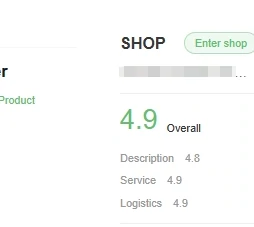
Three numbers, and the gap between them
The panel in this archived frame shows 4.9 overall, with Description 4.8, Service 4.9 and Logistics 4.9. Those are that shop's values on that day and they are not a rating of the product you happen to be looking at.
Read the spread, not the average. These scales compress hard at the top, so almost everything is between 4.6 and 5.0 and the absolute number tells you very little.
Description sitting below the other two is the pattern worth noticing. Description is the one that means the thing in the photographs and the thing in the box were not the same thing, which is exactly the failure a search cannot protect you from.
Logistics below the other two means slow dispatch, which costs you days against the clocks rather than money. Service below the other two means you are on your own if anything needs asking.
None of these three numbers are produced by the agent. They come from the marketplace, from buyers who already received the goods, and they are the only opinion on that page that was not written by the seller.

The variant panel is where the real ambiguity lives
Colour swatches on these listings are often labelled with a word and a four-digit code, because the shop is tracking fabric batches rather than colours. Two swatches that look identical can be different cloth.
Size labels get translated word for word, which is how you end up choosing between options that read like fragments of a sentence. When they are unreadable, that is a question for the seller, and the message box on the same panel is where it goes.
Quantity sits next to an inventory figure, and that figure is per variant rather than per listing. A shelf that looks well stocked can be down to two of the colour you want.
Whatever you pick here travels all the way to the warehouse and is what the inspection photos get checked against. What the inspection covers is the next decision along.
Judging a listing before you commit to the shop
The shop is one decision and the listing is another. A good shop can still have one listing that is a bad buy, usually because it is a different item from the one the photographs promise.
Signals that the listing is what it looks like
The photographs are consistent with each other: same lighting, same garment, same background family. A gallery stitched from five sources is five sellers' pictures.
The variant names are specific. Codes and measurements mean somebody is tracking stock; one swatch called black means nobody is.
Signals worth slowing down for
A high sold count with almost no reviews. The listing was renamed or relisted, so the number is not about this item.
A title that lists five materials. It is covering several products, and the one that ships is whichever the variant you picked maps to.
None of this is about authenticity, and none of it is settled by the inspection photos either, because what they check is the item against the listing rather than the listing against reality.
A short checklist, in the order the page presents it
Read the title back to front
The garment is the last word. Everything before it is a claim about the garment, and those claims are searchable text that the seller chose.
Check the sold count against the review count
A high sold count with almost no reviews is a listing that was recently renamed or recently relisted. Neither is fatal; both are worth knowing.
Open the shop panel and read the spread
Overall tells you little. The gap between Description and the other two tells you what kind of complaints this shop attracts.
Decide the variant before you decide the shop
If the colour you want is out of stock here, the shop question is moot and you are back to searching.
None of this is about authenticity. The operator's own prohibited-items policy requires that goods be authentic and its receipt notice says outright that it cannot identify genuine, fake or imitation brands. Those two sentences together are the boundary this site works inside.
Questions this page gets
What do the three shop scores actually measure
Description tracks whether the goods matched the listing, Service tracks the shop's handling of questions and problems, and Logistics tracks how quickly the shop dispatched. They are scored by the platform's own buyers, not by the agent and not by us.
Is a 4.9 shop safe
It is a good sign and not a guarantee. These scales compress near the top, so the useful reading is the gap between the three numbers rather than their absolute value. A shop at 4.9 overall with Description at 4.6 is telling you something specific.
Why does the same item appear in several shops
Because the same factory output is resold by many shops. That is normal on these platforms and it is why the shop panel matters: you are choosing a seller as much as a product.
Can the agent tell me whether a shop is trustworthy
No, and it does not claim to. The service buys what you point it at. The receipt notice states plainly that it cannot identify genuine, fake or imitation brands, which is the same boundary stated from the other direction.